
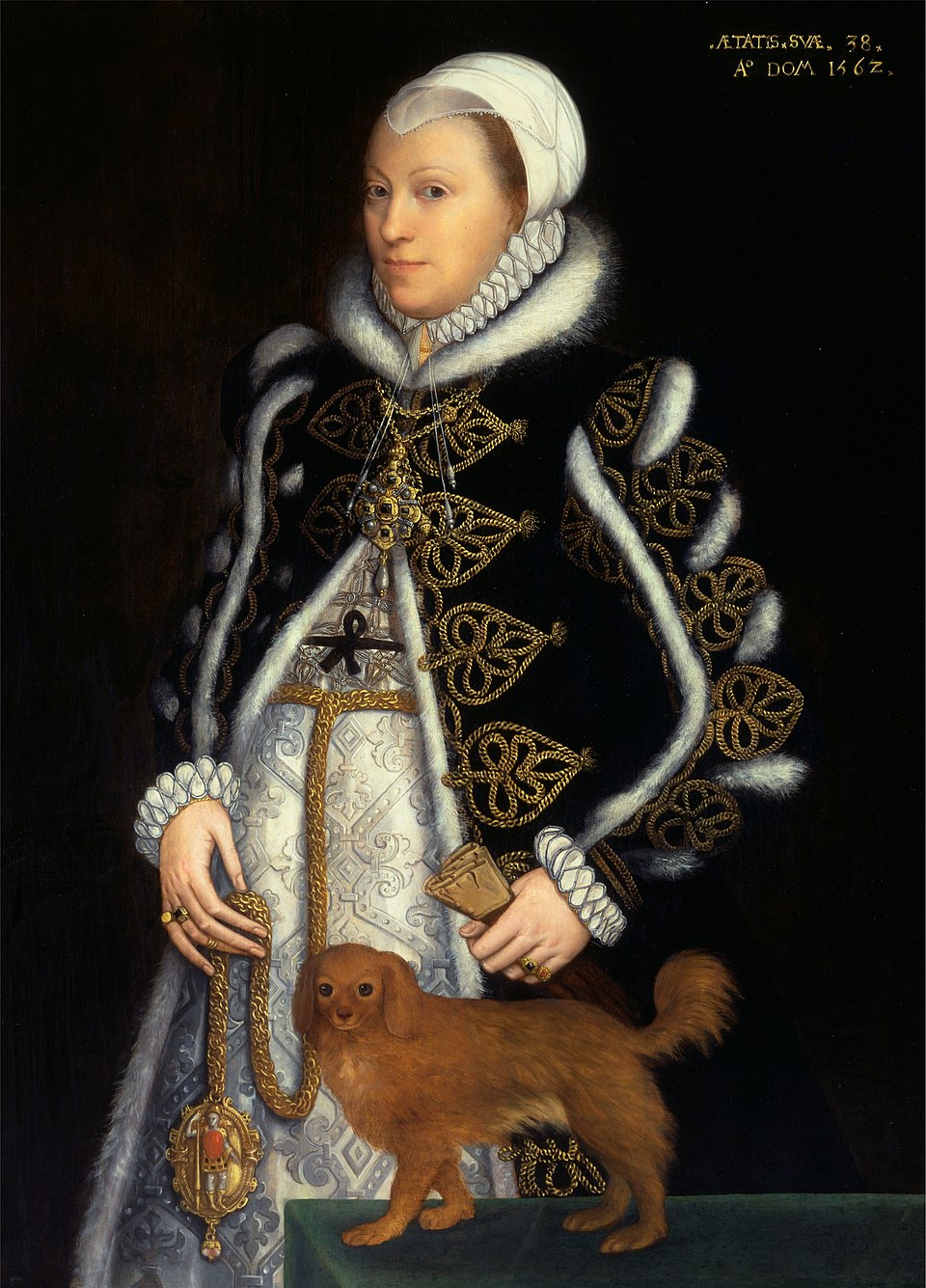
Katherine Carey’s story begins with a silence—one the Tudor court never dared to break, but everyone seemed to understand.
She was born in 1524, at the very moment her mother, Mary Boleyn, was King Henry VIII’s mistress. The timing alone raised whispers. Mary’s husband had been gone for months, long enough that the question of paternity hovered over the pregnancy like fog clinging to a battlefield. Henry, who was rarely subtle in his personal affairs, quietly paid Mary’s expenses while she carried the child. No public acknowledgments, no grand gestures—just the kind of hidden support he reserved for children he would never name but could never fully abandon.
And when Katherine grew, the rumors grew with her.
People noticed her coloring first: the red-gold hair, the pale skin, the unmistakable Tudor jawline. These features weren’t delicate or forgettable. They were the dynasty’s stamp—so recognizable that even her descendants carried echoes of Henry’s profile in their own portraits.
But what happened next is perhaps the most revealing part.
Anne Boleyn, newly rising at court and fighting for her family’s place, had every reason to distance herself from her sister’s past with the king. Yet she didn’t. Instead, she drew Katherine close, placing her in her household, giving her roles and prominence far above her official status. It was an act that makes little political sense—unless Katherine was more than a niece. Unless Anne understood exactly whose child she truly was.
Throughout Katherine’s life, royal favor followed her in ways it simply shouldn’t have. Appointments, access, a marriage far above her rank—these were not the rewards of a Boleyn girl from a middling noble family. These were the quiet pathways carved out for children kings refused to claim, but could not let fall.
Henry VIII never recognized Katherine Carey. He didn’t need to. The court saw the truth in her face, felt it in the king’s behavior, and watched it unfold in the opportunities given to her.
History leaves no confession. Just patterns. Glances. Silences that speak louder than proclamations.
And in that silence, Katherine Carey stands as one of the Tudor era’s most compelling mysteries—a woman whose life may reveal a truth her father never dared to write down.