
He didn’t just cheat on a queen.
He hid his mistress in a maze.
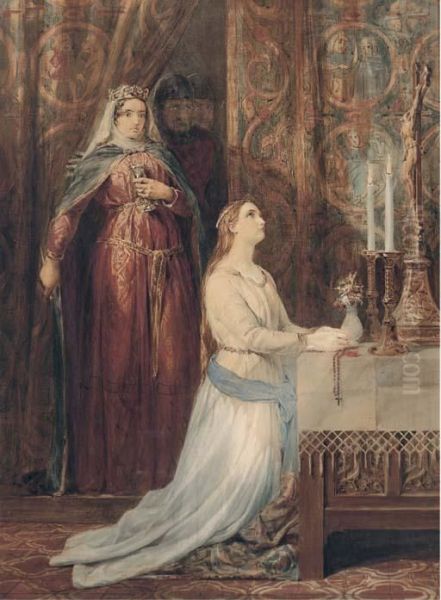
King Henry II’s betrayal of Eleanor of Aquitaine became one of the most enduring legends of medieval England. While Eleanor ruled, governed, and outmatched the king at every turn, Henry hid his mistress, Rosamund Clifford, in a secluded tower at Woodstock—protected by a labyrinth so complex that the queen, in theory, could never reach her.
But legends say Eleanor found her anyway.
The stories darken from there. Some claim Rosamund was forced to choose between poison or the blade. Others say Eleanor spared her life and sent her to a convent, where Rosamund died young in her early thirties. The truth is lost to time, buried beneath centuries of rumor, propaganda, and myth. But the whispers never died. They were too dramatic, too symbolic, too irresistible.
What history does make clear is this: Eleanor did not break.
She outlived Henry. She outmaneuvered him. And she helped place not one but two of their sons—Richard the Lionheart and John—on the throne. While men wrote the chronicles, Eleanor shaped the dynasty. She survived rebellion, imprisonment, betrayal, and heartbreak, and she still emerged as one of the most powerful women of the Middle Ages.
This was never just a love triangle.
It was a battle for power, legacy, and survival.
History remembers kings.
Legends remember the women they tried to silence.