
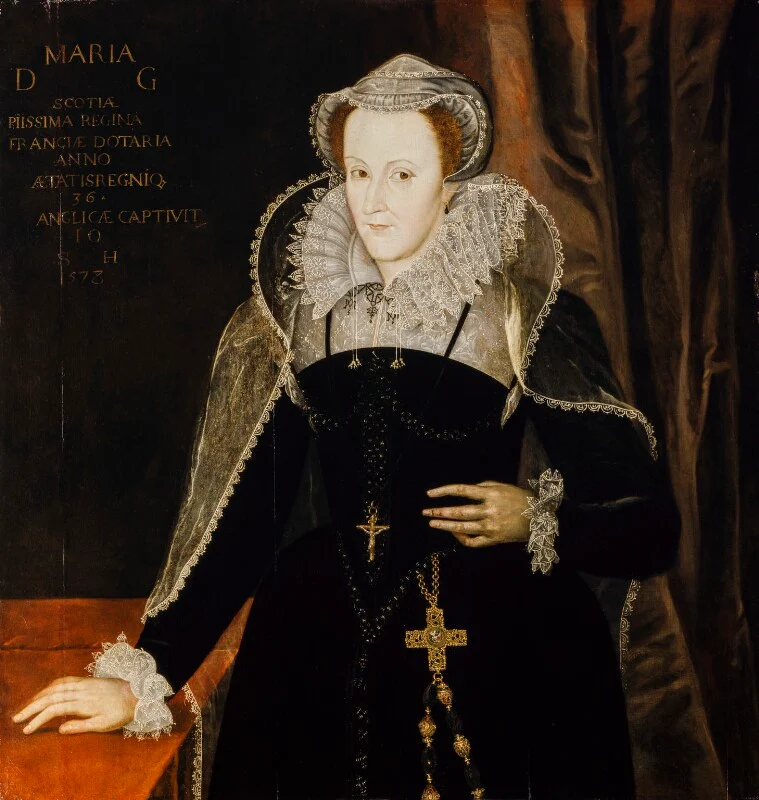
Mary, Queen of Scots is often remembered as tragic, reckless, or doomed.
But Mary Stuart was far more complex than the legend that surrounds her.
She lived an intensely active life. Mary loved riding horses, hunting, and dancing, and she often sought moments of freedom beyond the rigid expectations of royal life. At times, she even disguised herself as a stable boy to slip out at night and walk the streets of Edinburgh unnoticed.
It was a small rebellion for a queen whose life was constantly watched.
Mary’s personality was famously vivid. She was generous, sociable, and deeply emotional, capable of inspiring intense loyalty among her supporters. She loved animals, the outdoors, and the rhythms of court life, yet critics often accused her of acting on impulse rather than caution.
Her health also shaped much of her life.
Mary suffered from recurring illness and periods of profound depression, struggles that followed her from the French court to Scotland and later into imprisonment. The pressures of power, scandal, and political betrayal took a visible toll.
Even her weddings carried symbolic weight.
At her first marriage to Francis II of France, Mary wore white—not as a symbol of purity, but of mourning. In 16th-century France, white represented death. When Francis died in 1560, Mary’s grief was genuine. She dressed almost entirely in black afterward, mourning both a husband and the crown she had briefly worn as Queen of France.
Her life in Scotland soon became entangled with scandal and danger.
While imprisoned at Lochleven Castle, Mary attempted a daring escape disguised as a washerwoman. The plan nearly worked, but the boatman who was meant to ferry her across the water recognized her hands—pale, elegant, and unmistakably royal.
The escape failed.
During her captivity at Lochleven, Mary fell gravely ill and miscarried twins fathered by James Hepburn, Earl of Bothwell. The children were buried quietly on the island, a loss that rarely appears in the grand narratives of her life.
Mary’s reputation for scandal only grew.
She became the first known woman to play golf in Scotland, shocking observers when she was seen playing at St Andrews just days after the murder of her second husband, Lord Darnley. For her critics, the moment confirmed what they already believed—that Mary was reckless and indifferent to appearances.
For her supporters, it showed a woman refusing to collapse under pressure.
Her final years were spent in captivity.
Mary and Elizabeth I of England were cousins, linked through the Tudor bloodline, and Mary’s claim to the English throne made her a permanent threat. Elizabeth kept her imprisoned in England for nearly nineteen years, moving her from castle to castle under constant surveillance.
The two queens never met face to face.
In 1587, after being implicated in a plot against Elizabeth, Mary was condemned to death. Her execution became one of the most infamous in royal history.
It took three blows of the axe to sever her head.
Afterward, witnesses reported a final haunting detail. As Mary’s body was moved, her small terrier dog emerged from beneath her gown, where it had remained hidden throughout the execution.
In life, Mary and Elizabeth were rivals separated by politics, religion, and power.
In death, they rest side by side in Westminster Abbey.
Two queens who never met—
bound together by a history neither of them could escape.