
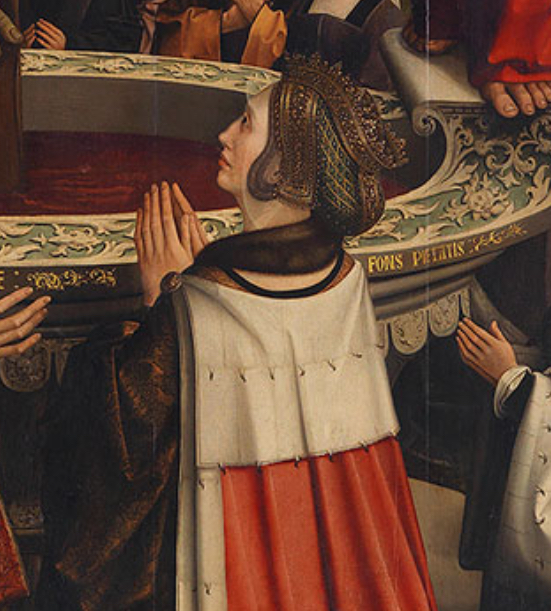
Maria of Aragon was born into Spain’s most powerful royal family, the daughter of Ferdinand of Aragon and Isabella of Castile. From childhood, her future was shaped by dynastic politics, and like her sisters, she was raised with the understanding that marriage would serve the crown before it ever served her.
She was first drawn into a marriage strategy that did not belong to her. Her older sister Isabella married Manuel I of Portugal first, in a union meant to tighten the bond between the Iberian crowns. When Isabella died in childbirth in 1498, and her infant son died soon after, the plan collapsed in grief almost as quickly as it had been made. Maria lost her sister, and the same dynastic design returned to her.
In 1500, Maria married Manuel I and became Queen of Portugal. What had begun as duty appears, in the surviving record, to have settled into something steadier and quieter than spectacle. Maria is remembered as serious, devout, and reserved, a queen whose presence was not dramatic but constant. In a court glittering with imperial wealth, she seems to have offered Manuel something less visible and more durable: stability.
That stability came at a cost.
Maria spent much of her married life pregnant. She bore ten children, helping secure Portugal’s royal future and linking its dynasty to some of the most powerful courts in Europe, including the future Holy Roman imperial line through her daughter Isabella of Portugal. But the physical toll was immense. Contemporary accounts describe her health deteriorating under the strain of near-constant pregnancies.
She died in Lisbon in 1517, at just 35 years old. Not in the drama of scandal, not in the mythology of court intrigue, but worn down by the long burden placed on queens whose bodies were treated as instruments of dynasty.
Maria of Aragon is rarely the loudest figure in the story.
She was betrothed, replaced, reclaimed — and then quietly became essential.