
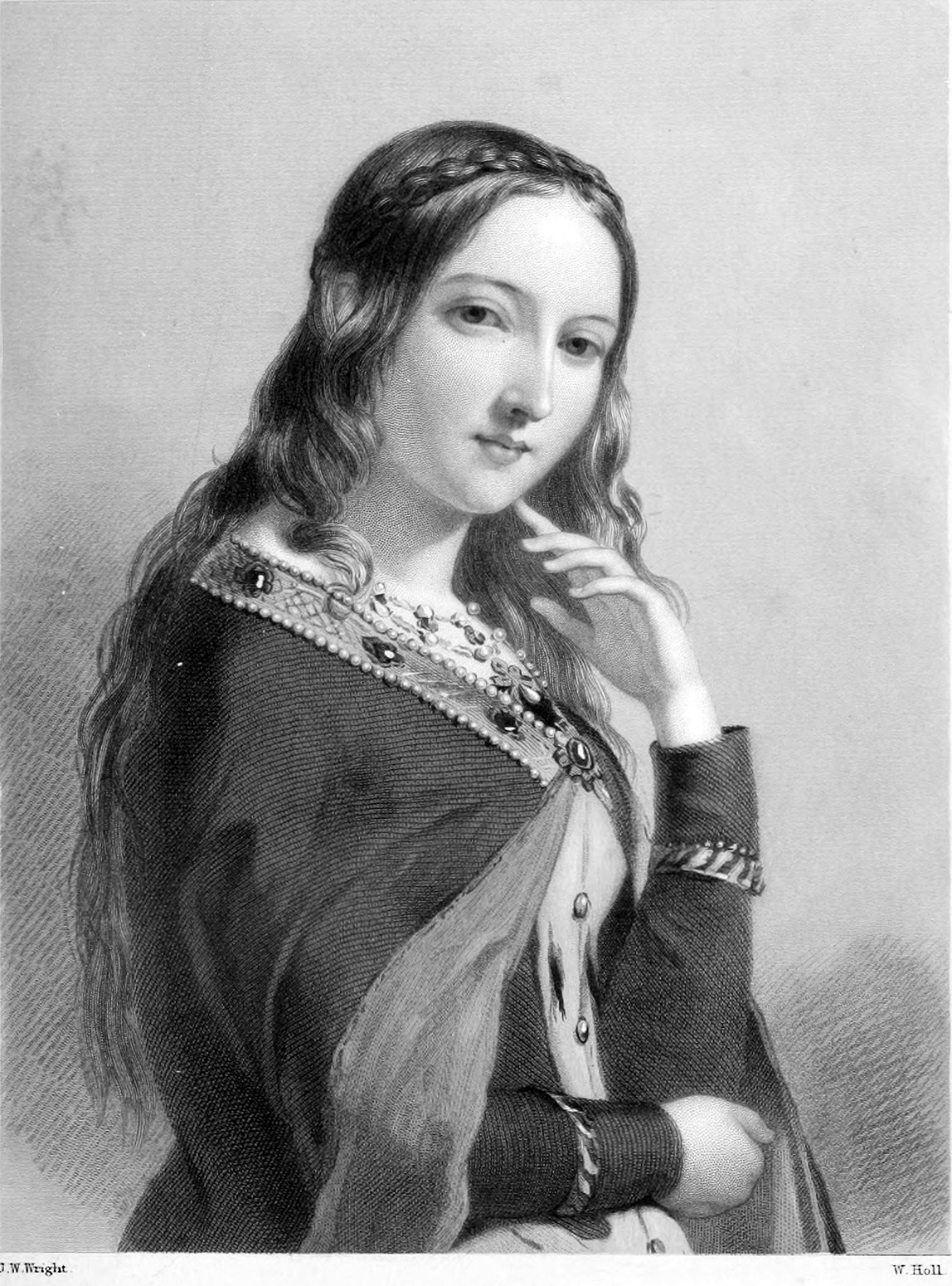
Margaret of Anjou was never dangerous because she loved violence.
She was dangerous because she refused to disappear.
Born a French princess in 1430, Margaret was sent to England as a teenage bride when she married King Henry VI. The marriage was meant to strengthen fragile peace between England and France, but from the moment she arrived, Margaret faced suspicion.
She was foreign.
She spoke with a different accent.
And the English court expected a queen who was decorative, obedient, and silent.
But Margaret entered a monarchy already on the brink of crisis.
Henry VI was known as a gentle and deeply pious king, yet he suffered from recurring episodes of severe mental illness that sometimes left him unable to rule for months at a time. During those periods, the crown still sat on his head, but real authority slipped into the hands of rival factions competing for power.
England had a king.
But it did not have leadership.
And into that vacuum stepped Margaret.
Not as a symbolic queen—but as a political force.
As tensions exploded into what became known as the Wars of the Roses, Margaret became the central figure of the Lancastrian cause. She negotiated alliances across England and France, secured military support, raised armies, and helped plan campaigns meant to defend the throne for her husband and, eventually, their son.
This was not ambition for its own sake.
Margaret understood what defeat would mean. In the brutal political world of 15th-century England, losing power rarely ended in retirement. It ended in imprisonment, exile—or execution.
For her, the war was about survival.
England watched something it had rarely tolerated: a queen doing the work of a king. Margaret traveled with armies, directed strategy, and fought relentlessly for her son Edward of Westminster, the Lancastrian heir.
But the war eventually turned against her.
Lancastrian forces were defeated. Her allies collapsed. And in 1471, the final blow came when her only son was killed after the Battle of Tewkesbury.
With Edward dead, the Lancastrian cause was finished.
Margaret was captured and later ransomed back to France, where she lived the remainder of her life in relative poverty and exile—far from the kingdom she had fought to defend.
History did not remember her kindly.
Men who led armies were praised as decisive leaders.
Margaret of Anjou was described as ruthless, unnatural, even monstrous.
But the truth is far simpler—and far harsher.
Margaret ruled in a world that punished women for doing exactly what power required.
And she did it anyway.