
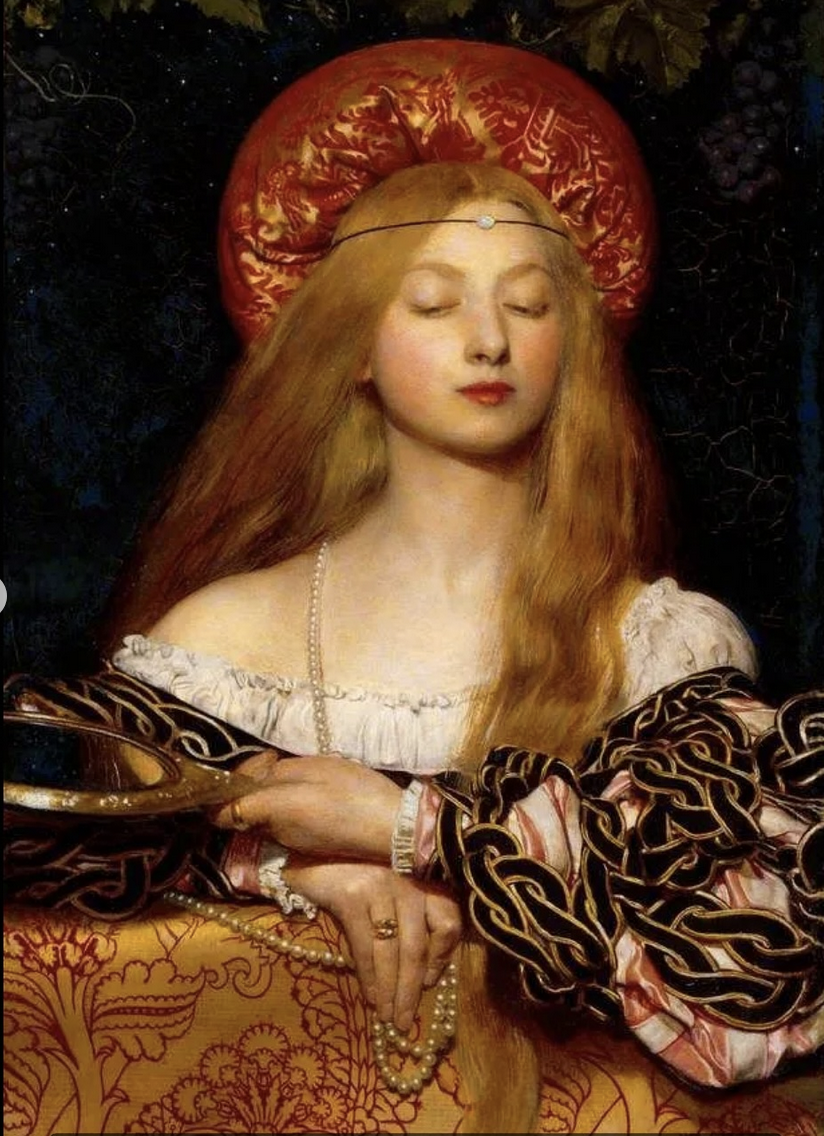
Lucrezia Borgia was born into one of the most infamous families of Renaissance Italy. As the daughter of Pope Alexander VI and sister to the ruthless Cesare Borgia, her life was entangled with power, politics, and scandal from the very beginning. Her family name opened doors—but it also carried a heavy shadow.
Throughout her life, Lucrezia was married three times, each union arranged for political advantage. While rumors swirled that her husbands met suspicious or untimely ends, much of the scandal surrounding her—including tales of incest and the infamous poison ring—was likely the product of gossip and political enemies seeking to tarnish her reputation. Yet Lucrezia was far from a mere pawn in her family’s schemes.
At the age of twenty-two, she was entrusted with governing the city of Spoleto, a role that showcased her intelligence, poise, and political skill. She managed her court with authority and respect, proving that she could wield power in her own right, not just as a daughter or sister of one of Italy’s most notorious dynasties.
Tragically, Lucrezia’s life was cut short by childbirth. Even so, her legacy continues to fascinate historians and the public alike. Was she a cunning poisoner and scandalous figure, or a capable duchess navigating the treacherous currents of Renaissance politics? The truth lies somewhere between the myths and the reality—a woman of intelligence, resilience, and influence, whose story endures centuries later.