
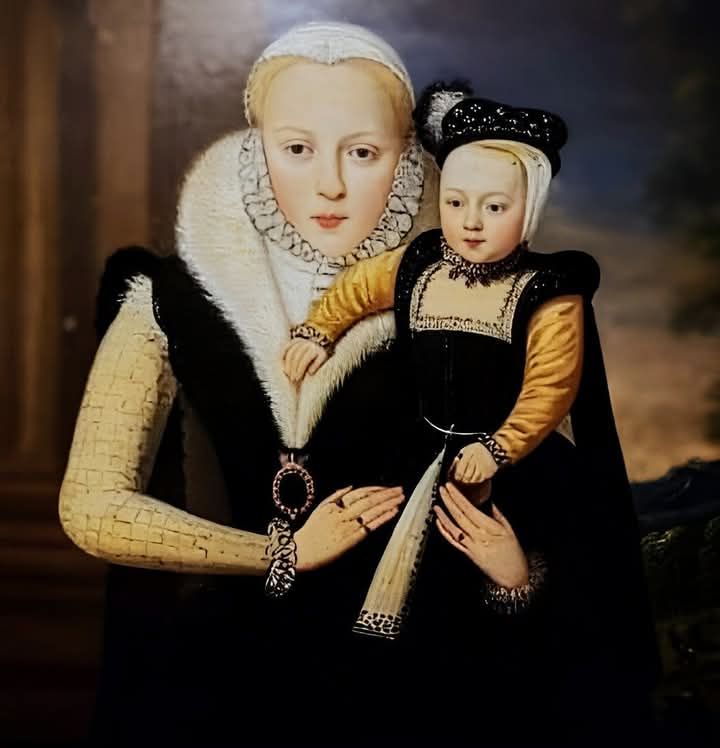
Born in 1540, Katherine Grey entered the world carrying a bloodline that could one day become deadly.
She was the younger sister of Lady Jane Grey, the girl remembered as the Nine Days’ Queen. But Katherine’s own claim to the English throne was not imagined or invented. Through her grandmother Mary Tudor, the sister of Henry VIII, Katherine stood next in line under the king’s will after Elizabeth and her sister.
When Elizabeth I became queen, Katherine became something deeply dangerous:
A young, Protestant woman with a legitimate claim — and the ability to produce heirs.
That was enough.
Elizabeth forbade her from marrying.
Katherine married anyway.
In 1560, she secretly wed Edward Seymour, Earl of Hertford. It was not an armed rebellion. There were no banners, no soldiers, no public declaration of defiance.
But in Tudor politics, a private marriage could be just as threatening as war.
A married heiress meant the possibility of children.
Children meant a rival dynasty.
And Elizabeth moved quickly.
Katherine and her husband were sent to the Tower of London. Their marriage was investigated, then declared invalid. On paper, the union was erased.
So was their future.
While imprisoned, Katherine gave birth to two sons—Edward in 1561 and Thomas in 1563. Instead of securing her line, their births only deepened the punishment. Both boys were immediately ruled illegitimate and removed from her care.
She was allowed only brief contact with them as infants.
There is no evidence she ever saw them again.
Elizabeth did not stop there.
Katherine was permanently separated from her husband. No shared household. No visits. No letters. No final goodbye, even as her health began to fail. The woman who had risked everything to build a family was forced to live without her husband and without her children, while the state insisted none of them legally belonged to one another.
When she was eventually released from the Tower, it was not freedom.
Katherine remained under constant guard, moved from house to house, watched, isolated, and denied any real independence. Her imprisonment had simply changed shape.
By the time she died on 26 January 1568, she was only 27 years old. Historians believe she likely died of tuberculosis, a condition made worse by years of confinement, stress, and forced separation.
Elizabeth I did not execute her cousin.
Because execution creates martyrs.
Instead, she chose something quieter.
She dismantled Katherine Grey’s marriage, stripped legitimacy from her children, separated her from everyone she loved, and let isolation do the rest.
Not a scaffold.
Not a public sentence.
Just a woman erased piece by piece until almost nothing was left.