
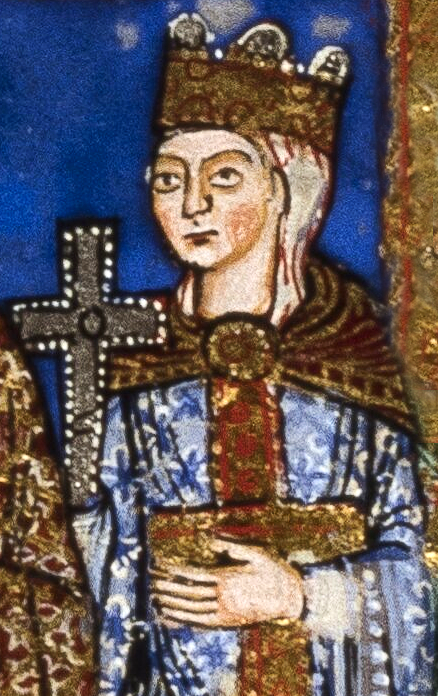
England almost had its first reigning queen centuries before Queen Mary I or Elizabeth I.
Her name was Empress Matilda.
Matilda was the only legitimate daughter of King Henry I of England. After the tragic death of his only surviving son, William Adelin, in the White Ship disaster of 1120, Henry faced a dangerous problem: the English crown had no clear male heir.
In response, he did something unprecedented.
Henry I publicly named Matilda as his successor. He required England’s most powerful nobles to swear an oath recognizing her as the future ruler of the kingdom. By law and royal decree, the throne of England was meant to pass to her.
But when Henry died in 1135, those promises quickly unraveled.
Instead of honoring their oath, many nobles supported Matilda’s cousin Stephen of Blois, who moved quickly to seize the crown. Stephen was crowned king before Matilda could assert her claim, backed by powerful allies who were deeply uncomfortable with the idea of a woman ruling England.
Matilda refused to accept it.
What followed was one of the most chaotic periods in English history—a brutal civil war known as The Anarchy. For nearly two decades, England was divided between supporters of King Stephen and those loyal to Matilda’s claim.
Matilda was not a passive challenger.
She raised armies, formed alliances, and fought to reclaim the crown that had been promised to her. In 1141, her forces captured Stephen in battle, placing her closer to power than ever before. For a brief moment, she was recognized as the kingdom’s ruler and adopted the title “Lady of the English.”
But the crown remained just out of reach.
Matilda’s planned coronation in London collapsed when local opposition forced her to flee the city before the ceremony could take place. Without the formal coronation that legitimized medieval rule, she was never officially crowned queen of England.
Eventually, the war reached a stalemate.
Matilda withdrew from direct conflict, but she did not abandon the future of her claim. Instead, she focused on securing the throne for her son, Henry of Anjou.
In 1154, that plan succeeded.
Henry became King Henry II of England, ending the long conflict and beginning the powerful Plantagenet dynasty, which would rule England for more than three centuries.
Matilda herself never wore the crown.
But the monarchy that shaped medieval England—and produced rulers like Richard the Lionheart and King John—existed because she fought for it.
England had almost crowned its first queen.
Instead, it inherited a dynasty born from her claim.