
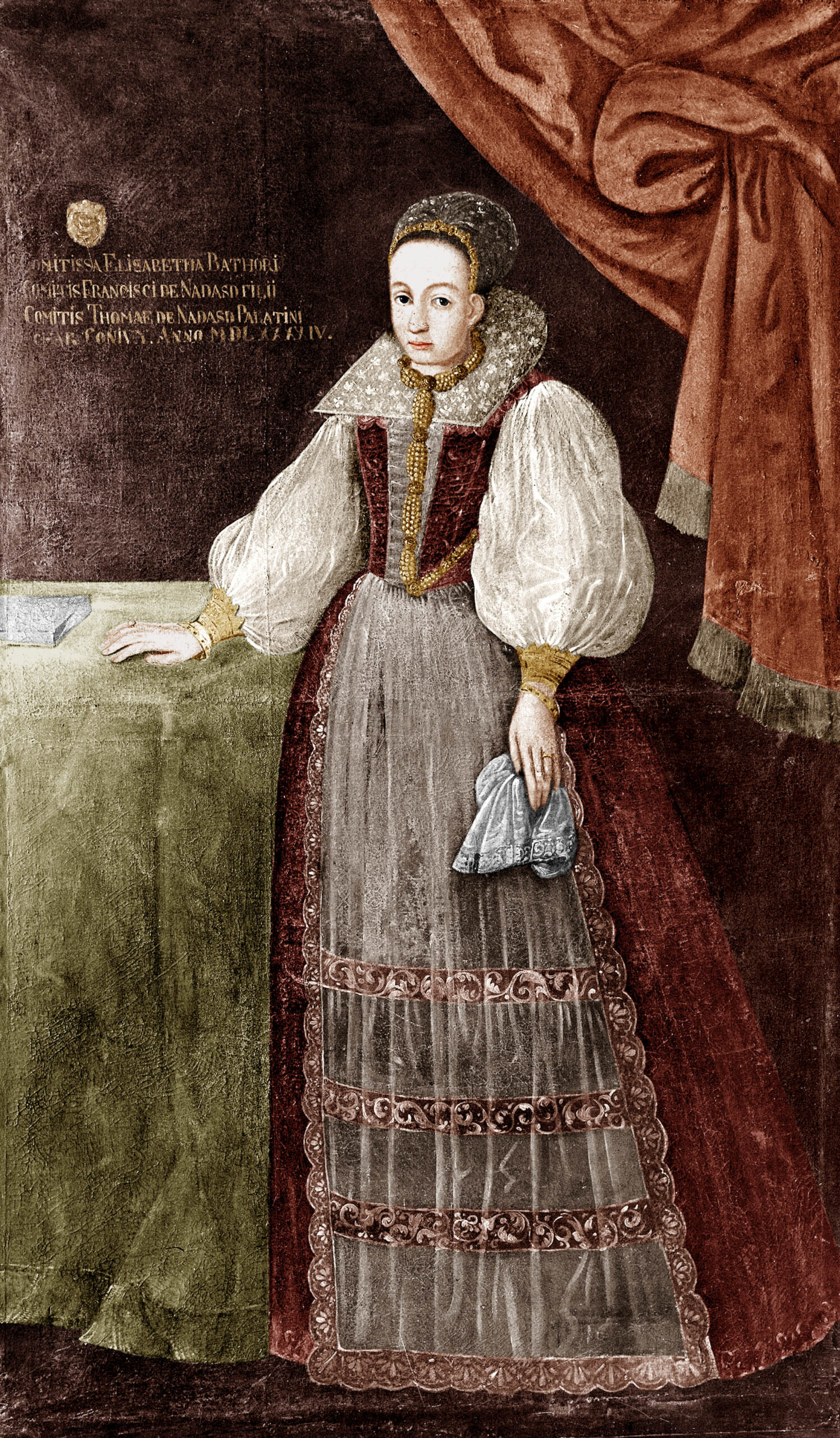
Elizabeth Báthory, known to history as the Blood Countess, remains one of the most unsettling—and contested—figures of early modern Europe.
Born in 1560 into one of Hungary’s most powerful noble families, Elizabeth lived in a world where aristocratic authority was nearly absolute. Wealth, land, and status placed her far beyond the reach of ordinary justice.
And for years, rumors grew inside that power.
Between the late 1590s and 1610, stories began to circulate that young servant girls sent to her estates never returned. What followed was a flood of accusations—some recorded, some whispered, many impossible to fully separate from fear.
Witnesses later claimed brutality beyond comprehension.
They described girls being beaten, burned, mutilated, starved, and left to die within castle walls. Some testimonies spoke of blood soaking floors and furniture, violence carried out in private spaces far removed from oversight.
But even in the horror, the details begin to fracture.
The most infamous legend—that Elizabeth bathed in the blood of virgins to preserve her youth—does not appear in the earliest records. That story emerged years later, growing alongside her reputation until it became inseparable from her name.
What is documented is more complicated.
Dozens of witnesses were questioned. Many testimonies were extracted under torture, a method that casts doubt over their reliability. Hundreds of deaths were alleged, but only a smaller number could be directly substantiated in surviving records.
And Elizabeth herself was never formally tried.
As a noblewoman, she was spared public execution. Instead, she was quietly imprisoned within her own residence at Čachtice Castle, where she was sealed inside her rooms and kept under guard.
She remained there for four years.
Until her death.
Others did not receive the same restraint.
Her alleged accomplices—mostly servants—were tortured and executed. Their deaths were public. Theirs were the confessions used to shape the narrative that followed.
Which raises a question history has never fully answered:
Who was being punished—and who was being preserved?
Some historians argue Elizabeth Báthory was a sadistic serial killer, protected for years by her rank until the scale of violence could no longer be ignored.
Others believe something else entirely.
They point to the political instability of the Kingdom of Hungary, to the immense wealth tied to her estates, and to the convenience of removing a powerful widow whose lands could be redistributed. In this version, Elizabeth becomes less a monster—and more a figure shaped, exaggerated, or even constructed by those who stood to benefit from her fall.
The truth may exist somewhere between the two.
But what remains is the story itself.
A noblewoman accused of unimaginable cruelty.
A trial that never happened.
A punishment carried out behind closed doors.
And a legacy that still asks the same question centuries later:
Was Elizabeth Báthory a monster—
Or a woman history needed to make into one?