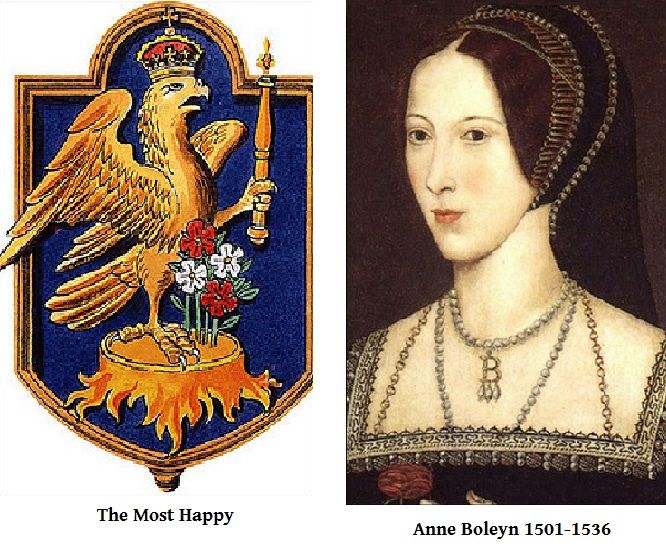
Anne Boleyn didn’t need a crown to make her stand. Long before she became queen, she was already battling the Tudor court—and she chose to fight with the one weapon she wielded better than anyone else: symbolism.
The nobles whispered about her constantly. She was too educated. Too confident. Too unwilling to bow her head and fade into the shadows. They said she didn’t know her place. They said she was dangerous. They said she’d never last.
Anne answered them with silk, thread, and a motto.
She had her personal declaration embroidered onto the livery of her servants—bold, unmistakable, and impossible to ignore as they walked through the palace corridors. It was her elegant, razor-sharp way of telling the entire court exactly what she thought of their judgment. A Tudor-era “FU,” delivered with perfect poise.
Every stitch was a warning.
Every appearance of her servants was a reminder:
Anne Boleyn would rise, whether her enemies liked it or not.
This wasn’t the gesture of a woman relying on Henry VIII’s attention. It was the move of someone who understood power long before she ever wore it. Anne knew how to weaponize image, how to command a room without speaking a word, how to turn even clothing into a political statement. She wasn’t shaped by the crown she eventually wore—she was already formidable, already brilliant, already unstoppable.
History often paints Anne as made by the king, but moments like this reveal something different. She was never merely reacting to the court’s hostility. She was creating her own momentum, sending her message through embroidered cloth when she couldn’t speak it aloud.
Anne Boleyn didn’t wait for a coronation to tell the world who she was.
She told them from the start:
She would not step aside.
She would not be silenced.
And she would not bow.
It was subtle. It was stylish. It was political.