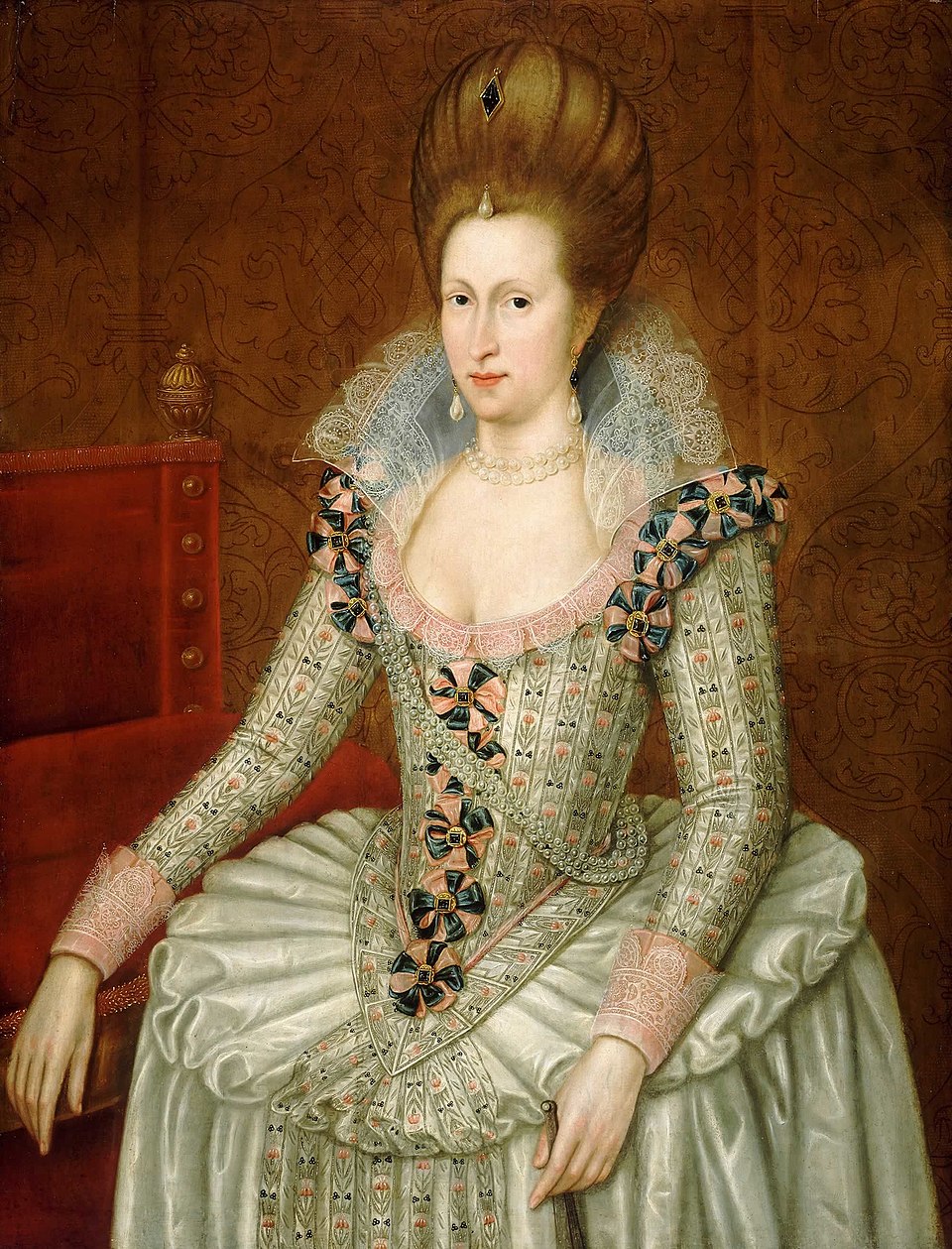
Anna of Denmark was Queen of Scotland—and later Queen of England—yet for years, she did not have legal control over her own sons.
Under Scottish royal custom, male heirs to the throne were considered to belong not to their mother, but to the state. Future kings were to be shaped by male guardians, political discipline, and distance from maternal influence. For Anna, queenship did not guarantee authority over the children she had carried.
It guaranteed loss.
Her first surviving son, Prince Henry, was born in 1594. Almost immediately after his birth, he was taken from her care and placed under the control of the Earl of Mar at Stirling Castle. Anna was denied custody and granted only limited, supervised access. She was a queen—but she was not permitted to raise her own child.
Her second son, Prince Charles, born in 1600, was also removed from her direct care in early childhood. Frail, physically weak, and often ill, Charles was placed in a separate household under male supervision. Like his brother, he was raised according to the belief that future kings should be hardened by distance and discipline—not by their mother’s presence.
Anna refused to accept it quietly.
She petitioned the council.
She pleaded with her husband, King James VI of Scotland.
He refused to intervene.
James believed that royal sons should be separated from their mother in order to become stronger, more disciplined, and less emotional. To him, this was statecraft. To Anna, it was cruelty.
At one point, while pregnant, Anna traveled to Stirling Castle to demand access to Prince Henry. The journey was physically exhausting, and the emotional strain was severe. Soon afterward, she collapsed and miscarried the child she was carrying.
Even then, she did not stop fighting.
Over the years, Anna continued to challenge the system through letters, alliances, and open confrontation. She never won full legal custody of her sons, but she gradually regained influence within their households. With Prince Henry in particular, she became fiercely protective, shaping parts of his education, environment, and daily life as much as court politics allowed.
Then, in 1612, Henry died suddenly at the age of 18.
The loss was devastating.
It also changed the future of the monarchy. Henry’s death transformed Charles, the younger son long separated from his mother, into heir to the throne. He would later rule as Charles I—and become the only English monarch ever executed by his own government.
Anna’s daughters were treated differently.
Elizabeth, born in 1596, remained more closely under her mother’s influence. But two other daughters, Margaret and Mary, died in early childhood, adding private grief to a life already shaped by political struggle and maternal loss.
Contemporary observers were rarely kind to Anna.
They described her as difficult, emotional, and unstable.
But those judgments say as much about the world around her as they do about the queen herself.
Anna of Denmark lived in a monarchy that expected a queen to produce heirs—then step aside while the state claimed them.
You might also like
 Elizabeth “Bessie” Blount: The Mistress Who Gave Henry VIII His Only Acknowledged Illegitimate Son
 Princess Beatrice and Prince Leopold: The Royal Siblings Bound by Illness and Loss
 Mary, Queen of Scots: The Scandals, Escapes, and Tragic Death of Scotland’s Most Famous Queen
 Catherine of Valois: The Secret Marriage That Led to the Tudor Dynasty