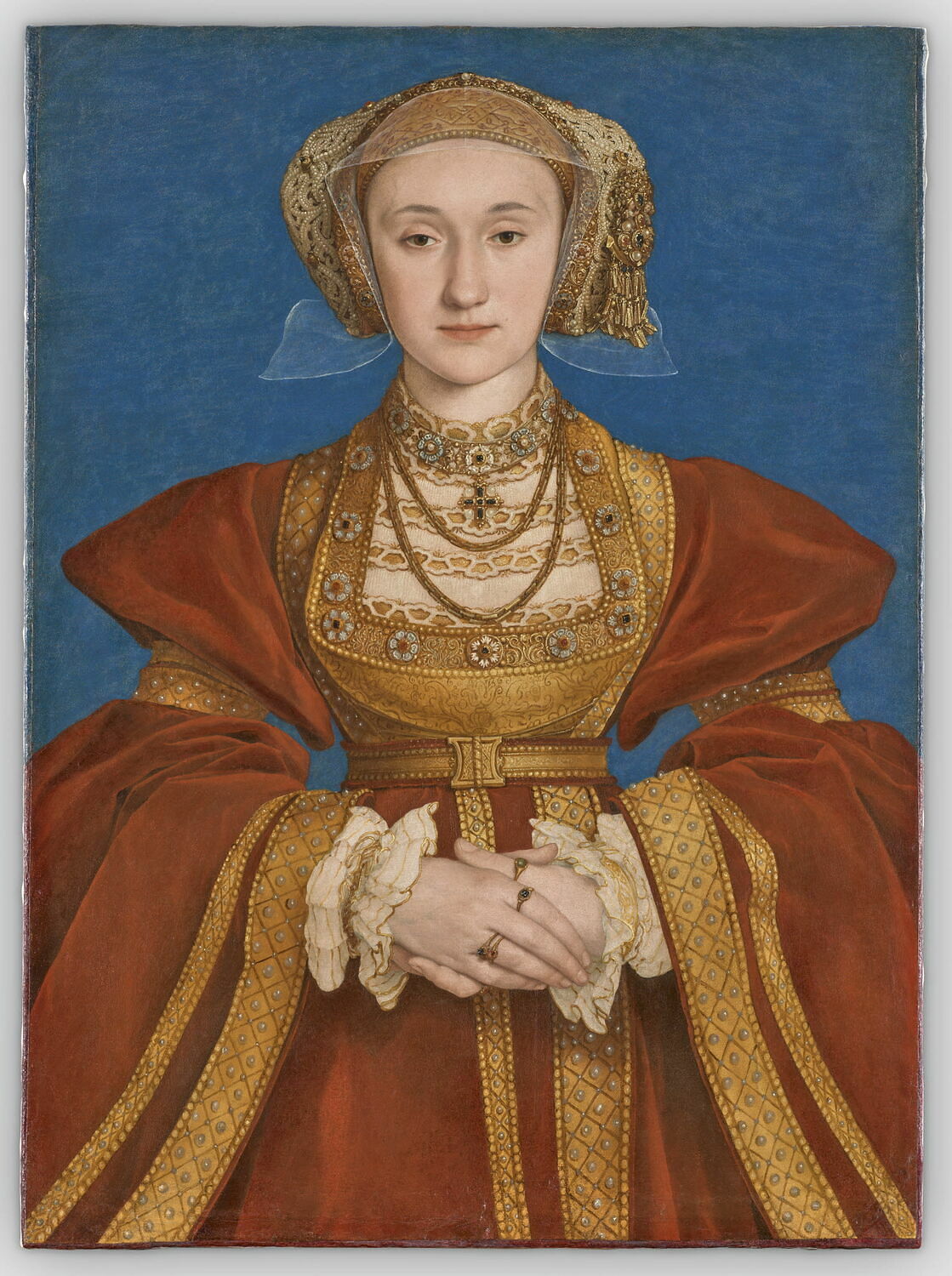
One of the most deliciously scandalous stories about Anne of Cleves claims that after her failed marriage to Henry VIII, she hung Hans Holbein’s famous portrait of herself in her castle—just to mock the king who had rejected her. It’s a tale that feels perfectly suited to Tudor drama: quiet revenge, sharp wit, and a woman getting the last laugh.
But like many good stories from history, it isn’t true.
There is no evidence that Anne of Cleves ever displayed Holbein’s portrait as an insult to Henry VIII. In fact, contemporary records show no mention of her owning or exhibiting the painting at all. The idea that she used it to humiliate the king appears to be a much later invention, born from hindsight and a love of irony rather than documented fact.
Even the portrait itself was not considered misleading at the time. Hans Holbein the Younger was one of the most respected artists in Europe, and his painting of Anne was widely regarded as accurate. Henry VIII never blamed Holbein for the failed marriage, and the artist continued to enjoy royal favor afterward—something that would have been unthinkable had the king felt deceived.
The insult most often associated with Anne—Henry calling her a “Flanders mare”—also falls apart under scrutiny. This phrase does not appear in contemporary Tudor sources and wasn’t recorded until the 1600s, decades after Anne’s death. While Henry was clearly disappointed by the marriage, the language later attributed to him reflects rumor and exaggeration rather than proven history.
What happened to the portrait itself only adds to the mystery. After 1539, the painting vanishes from historical records entirely. It reappears more than a century later in the collection of the Earl of Arundel, one of England’s great art collectors, before being sold to France. Eventually, the portrait found its permanent home in the Louvre, where it remains today.
The truth, then, is less vengeful but no less fascinating. Anne of Cleves did not need petty revenge to win her story. She walked away from Henry VIII alive, wealthy, and independent—an extraordinary outcome in a court where most queens did not survive their marriages.
So while the image of Anne quietly mocking the king with his own chosen portrait is irresistible, history tells us otherwise. The real triumph of Anne of Cleves was not trolling Henry VIII—but outlasting him.