
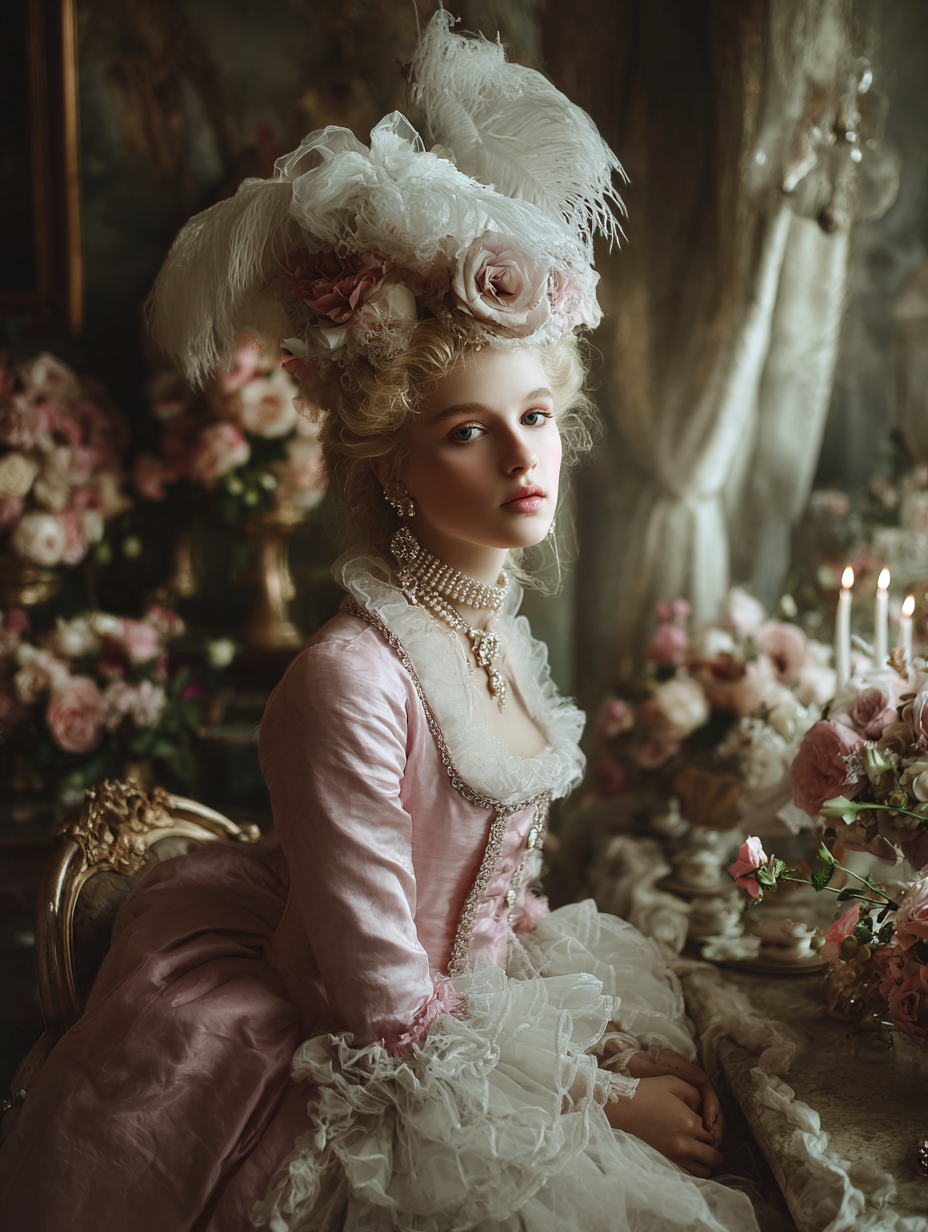
Marie Antoinette didn’t just live at Versailles—she escaped it. Tucked away from the gilded halls and suffocating etiquette of court life was her private retreat: the Hameau de la Reine, a carefully constructed “rustic” village designed to look like a simple country farm.
But this was no ordinary farm.
At the Hameau, Marie Antoinette dressed as a shepherdess in silk gowns trimmed with lace. She milked cows whose hides had been scrubbed spotless for her royal hands. The cottages looked charmingly weathered, but inside they were furnished with fine fabrics and elegant décor. It was pastoral life—filtered through privilege and fantasy.
To the queen, the Hameau was an escape. Court life at Versailles was rigid, performative, and relentlessly watched. The farm allowed her to retreat into an idealized vision of simplicity, where she could play at domestic life, motherhood, and nature—free from the demands of politics and ceremony.
To the French public, however, it looked like something else entirely.
While Marie Antoinette played peasant, real peasants were starving. Bread shortages, crushing taxes, and economic instability plagued France. The image of a queen pretending to live simply—while surrounded by luxury and insulated from suffering—cemented her reputation as out of touch and indifferent.
The Hameau de la Reine became a symbol of everything people resented about the monarchy: excess, fantasy, and disconnect from reality. Whether fair or not, it helped transform Marie Antoinette from a misunderstood young queen into a lightning rod for revolutionary anger.
You might also like
 Marie Antoinette and Madame du Barry: The Silent Feud That Ended at the Guillotine
 Marie Antoinette and Louis XVI: The Royal Marriage That Ended in Revolution
 Marie Antoinette & Princesse de Lamballe: A Friendship That Survived a Revolution
 Marie Antoinette at 14: The Public Wedding Night That Defined Her Fate