You know Marie Antoinette.
But history rarely tells you about her mother.
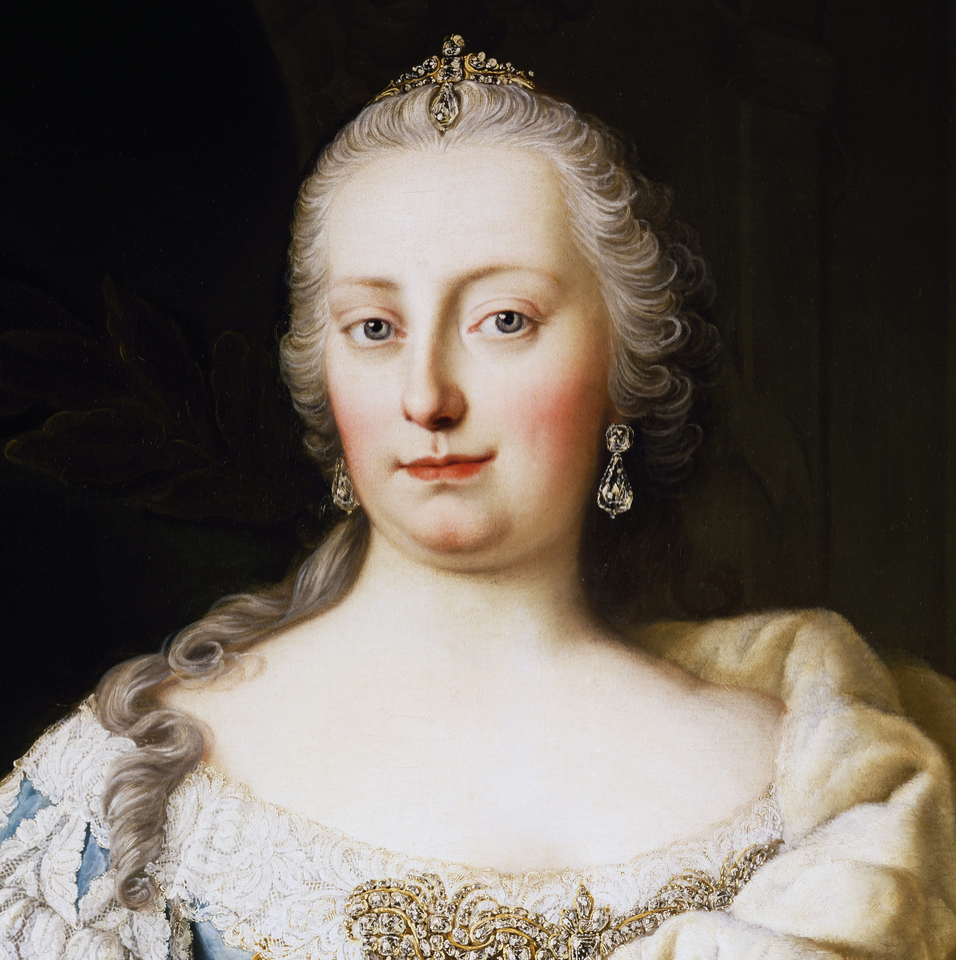
Maria Theresa of Austria ruled one of Europe’s largest empires while pregnant sixteen times.
When she inherited the Habsburg throne in 1740, Maria Theresa was only 23 years old. Her father, Emperor Charles VI, had spent years trying to secure her succession through the Pragmatic Sanction, forcing European powers to promise they would recognize his daughter as ruler.
The moment he died, those promises collapsed.
Several rival kingdoms immediately invaded Habsburg territory, convinced that a young woman could not possibly hold the empire together. The challenge triggered the War of the Austrian Succession, a brutal conflict that threatened to dismantle the Habsburg monarchy entirely.
Maria Theresa faced it while already pregnant with her first child.
She ruled through war, childbirth, recovery, and grief—often simultaneously. Throughout the conflict, she negotiated alliances, reorganized finances, strengthened the military, and fought to preserve the lands she had inherited.
Her authority was not theoretical.
In one of the most famous moments of her reign, Maria Theresa appeared before the Hungarian Diet in 1741 while pregnant, appealing directly to Hungarian nobles for military support. According to contemporary accounts, the assembly responded by drawing their swords and pledging their loyalty to defend her and the Habsburg crown.
It was power grounded in presence.
Over the course of her life, Maria Theresa gave birth sixteen times. Out of those children, ten survived to adulthood, including the future Marie Antoinette. Each pregnancy unfolded while she remained the sovereign ruler of her empire.
Motherhood did not remove her authority.
It shaped how she ruled.
Maria Theresa governed the Habsburg monarchy for forty years, reforming taxation, reorganizing government administration, strengthening the army, and expanding education. Her policies transformed Austria into a more centralized and resilient state capable of competing with Europe’s major powers.
Yet there was one title she never held.
Although her husband, Francis Stephen of Lorraine, was crowned Holy Roman Emperor, Maria Theresa herself was never formally given the imperial title. By law and tradition, that crown belonged to a male ruler.
But across Europe, the reality was obvious.
Everyone knew who held the power.
History often remembers Marie Antoinette, the daughter who would later become the most famous queen in France.
But in her own lifetime, it was Maria Theresa whom Europe watched—and feared.
You might also like
 Marie Antoinette and Louis XVI: The Royal Marriage That Ended in Revolution
 Maria Eleonora of Brandenburg: The Queen Whose Grief Cost Her a Crown
 Marie Antoinette and Madame du Barry: The Silent Feud That Ended at the Guillotine
 Marie Antoinette & Princesse de Lamballe: A Friendship That Survived a Revolution