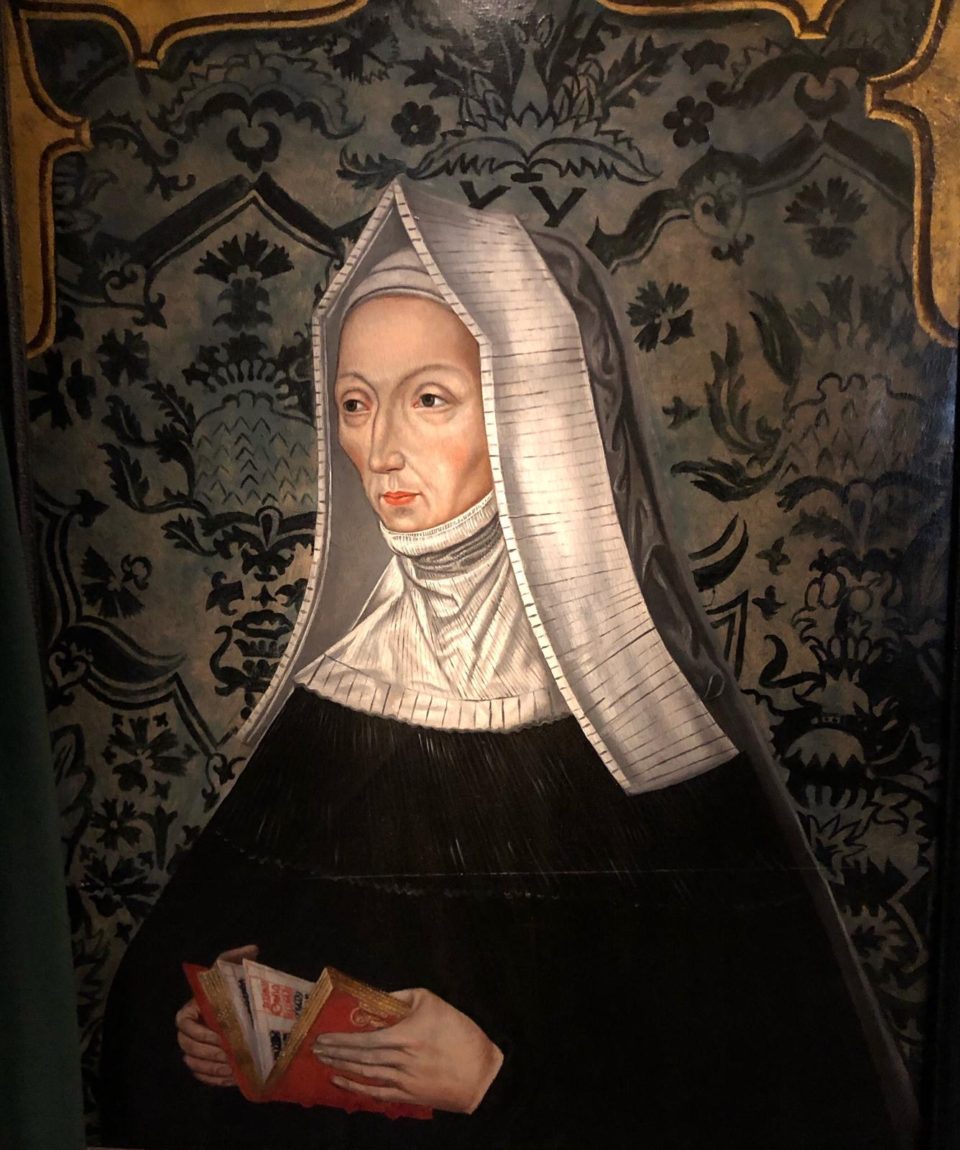
Margaret Beaufort was born in 1443 into one of the most powerful—and most dangerous—bloodlines in England.
Through her father, she descended from the House of Lancaster, giving her a direct, if fragile, claim to the English throne during the brutal conflict that would become known as the Wars of the Roses.
From the beginning, Margaret’s life was shaped by politics.
Her childhood ended almost as soon as it began. Like many noble girls of the 15th century, she was married while still a child in order to secure alliances and protect her family’s claim. By the age of 13, Margaret became pregnant.
The birth that followed nearly killed her.
In 1457, she gave birth to her only child, Henry Tudor, the future Henry VII. Contemporary accounts describe a labor so severe that Margaret’s small body was likely permanently damaged. Modern historians and medical experts widely believe the traumatic birth left her unable to bear children again.
That single child would define the rest of her life.
Margaret devoted herself entirely to Henry’s survival.
England during the Wars of the Roses was a dangerous place for anyone with a claim to the throne. Rival factions of York and Lancaster fought for power, and children connected to royal bloodlines were often seen as threats that needed to be eliminated.
Henry Tudor spent much of his youth in exile, living far from England to avoid capture or execution.
Margaret remained behind.
As a widow and later through carefully arranged remarriages, she navigated the English court with extraordinary caution. She built alliances, communicated through coded correspondence, negotiated marriages, and used religious patronage to quietly strengthen support for her son’s claim.
It was a dangerous balancing act.
Margaret had to appear loyal to whichever king currently ruled England while secretly working to protect the son who might one day challenge that rule.
In 1485, that moment arrived.
Henry Tudor landed in Wales, gathered supporters, and marched against King Richard III. At the Battle of Bosworth, Richard was killed, and Henry emerged victorious.
The Tudor dynasty had begun.
Margaret Beaufort never became queen herself, but her position at court was unlike that of any other woman in England. As the king’s mother, she was granted extraordinary authority. She signed documents as “Margaret R”, lived independently from her husband, and exercised influence that rivaled many of the kingdom’s most powerful men.
In her later years, Margaret turned her attention to religion and education.
She became a major patron of learning, founding Christ’s College and St John’s College at Cambridge University, institutions that still exist today. Her support helped shape the intellectual life of early Tudor England.
Margaret Beaufort had given birth only once.
But that single child changed the course of English history.
At thirteen, she became a mother.
For the next fifty years, she worked to place a crown on her son’s head—and succeeded.