
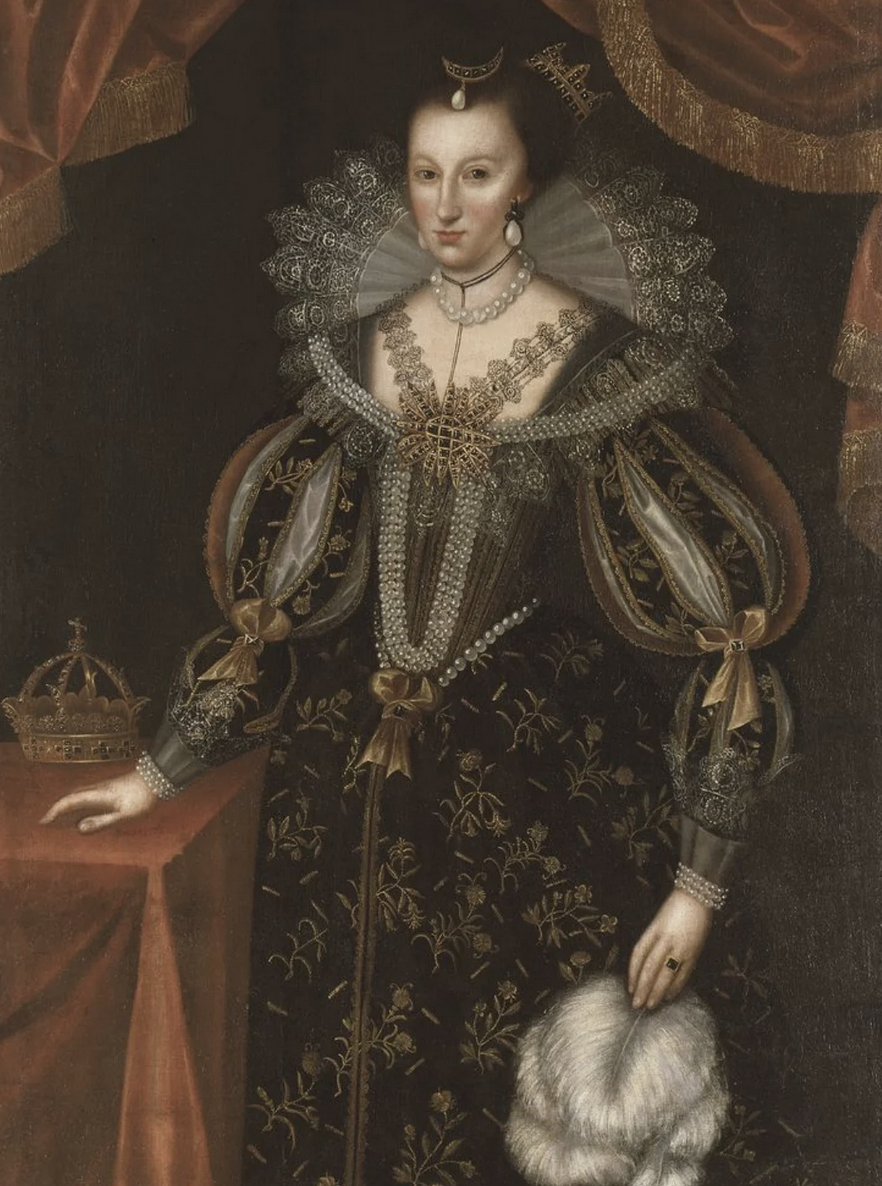
Maria Eleonora of Brandenburg became Queen of Sweden in a marriage meant to strengthen power and produce heirs for the Swedish crown.
Like many queens of the 17th century, her role was clearly defined: secure the dynasty.
The pressure was immediate and relentless.
When Maria Eleonora finally gave birth in 1626, the court waited anxiously for the announcement of a son. Instead, the child was a daughter—Christina of Sweden. Though Christina would later become one of the most famous monarchs in European history, her birth initially disappointed a court desperate for a male heir.
Maria Eleonora’s position became increasingly fragile.
But the event that truly changed her life came six years later.
In 1632, her husband King Gustavus Adolphus, one of Europe’s most celebrated military leaders, was killed in battle during the Thirty Years’ War. His death shocked Sweden and left the kingdom in the hands of a six-year-old queen.
For Maria Eleonora, the loss was devastating.
Her grief was intense, public, and impossible to hide. She refused to allow Gustavus Adolphus to be buried. His embalmed body remained with her for more than a year, and according to accounts from the time, his heart was kept in a golden casket inside her chambers.
The palace itself became a place of mourning.
Rooms were draped entirely in black. Windows were covered to block out daylight. Maria Eleonora surrounded herself with reminders of the king she had lost, living in an atmosphere defined by grief rather than court life.
But the Swedish governing council did not see this as mourning.
They saw it as a threat to stability.
With Sweden ruled in the name of a child, the council needed control and predictability. Maria Eleonora’s behavior convinced them she could not be trusted with political influence—or with the upbringing of the young queen.
She was declared unfit.
Maria Eleonora was removed from power, placed under supervision, and separated from her daughter. Christina would be raised by regents and advisors, growing up largely without her mother as she prepared to rule Sweden.
The child Maria Eleonora had been criticized for giving birth to would eventually become Queen Christina, one of the most unusual and intellectually celebrated rulers in European history.
Maria Eleonora would never share in that future.
Though she eventually escaped strict confinement later in life, much of her remaining years were spent under watch, removed from the center of Swedish power.
A queen whose greatest crime, in the eyes of her government, was grief that refused to behave the way power expected it to.
You might also like
 Maria Theresa of Austria: The Empress Who Ruled Europe While Pregnant Sixteen Times
 Maria of Aragon: The Princess Replaced, Reclaimed, and Quietly Loved
 Queen Charlotte: The Grief, Duty, and Endurance Behind Britain’s Longest-Reigning Consort
 Eleonora di Garzia di Toledo: The Medici Wife Who Died Quietly While Her Husband Was Protected