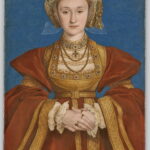

Queen Anne of Great Britain ruled during one of the most politically significant periods in British history. Her reign saw the Act of Union in 1707, the rise of parliamentary power, and the global conflicts of the War of the Spanish Succession.
But behind the politics and ceremony, Anne’s private life was marked by relentless loss.
Between her early twenties and mid-thirties, Queen Anne was pregnant at least seventeen times.
Most of those pregnancies ended in miscarriage or stillbirth. Others resulted in infants who lived only days or weeks. The pattern reflected the harsh reality of childbirth in the late 17th century, when chronic illness, limited medical knowledge, and constant pressure to produce a royal heir made pregnancy both a duty and a danger.
Every pregnancy carried the weight of the monarchy’s future.
Only one of Anne’s children survived beyond infancy.
Prince William, Duke of Gloucester, was born in 1689 and quickly became the fragile hope of the Stuart dynasty. Sickly but determined, he survived childhood illnesses and grew into the boy many believed would one day rule Britain.
For a time, the succession seemed secure.
Then, in 1700, tragedy struck again.
Prince William died suddenly at the age of eleven.
His death left Queen Anne without a surviving heir. After years of pregnancy, childbirth, and grief, the Stuart line had no direct future through her.
Anne continued to rule for fourteen more years.
But the question of succession could no longer be ignored. With no surviving children, Parliament took an extraordinary step. Through the Act of Settlement of 1701, it declared that the crown would pass to the Protestant descendants of the House of Hanover if Anne died without heirs.
When Queen Anne died in 1714, that moment arrived.
The throne passed to George I of Hanover, ending the Stuart dynasty and beginning a new chapter in British royal history.
Anne’s reign is often remembered for political transformation—the union of England and Scotland, the strengthening of Parliament, and Britain’s expanding influence abroad.
Yet the personal story behind that reign tells a different truth.
For Queen Anne, queenship was not defined by coronations or ceremony.
It was defined by seventeen pregnancies, a single surviving child, and the grief of watching even that fragile hope disappear.
Not a throne secured by heirs.
But a crown carried through endurance.