
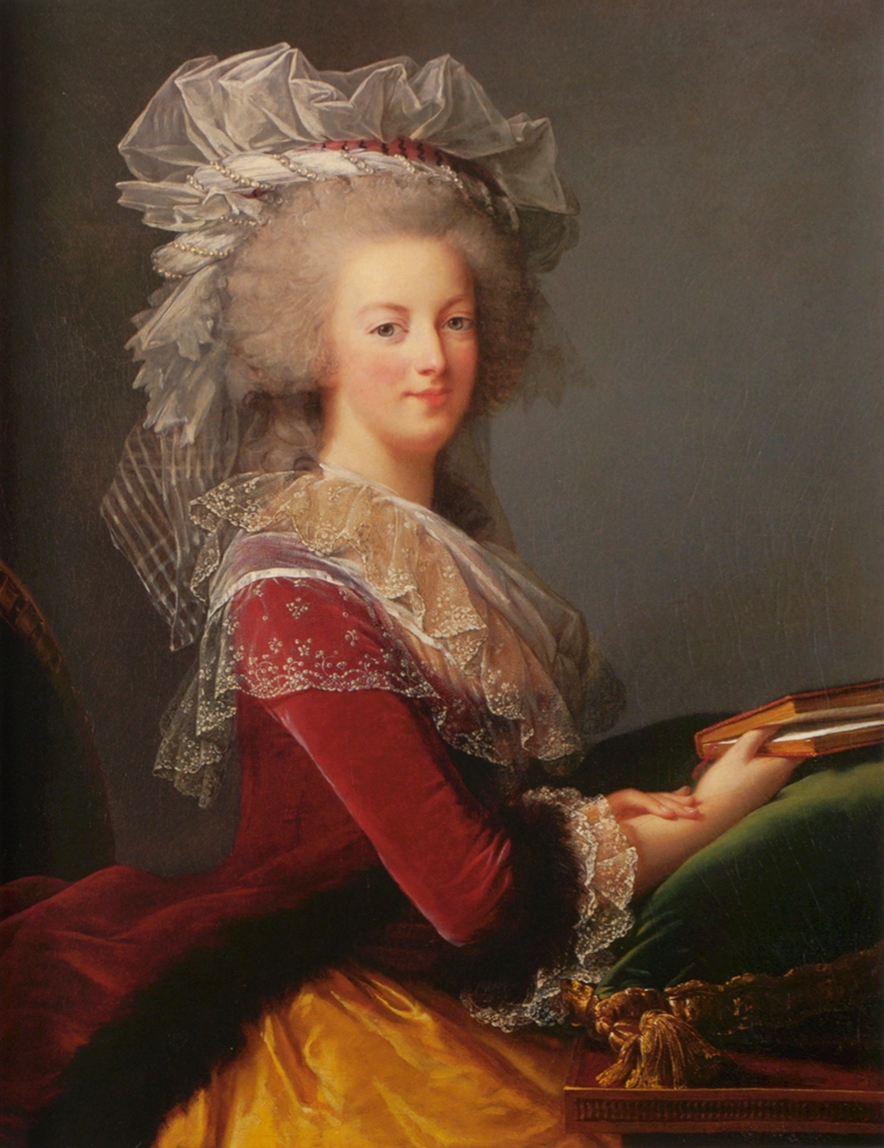
Marie Antoinette and Louis XVI were married as children.
She was 14. He was 15. Their union was arranged to secure an alliance between Austria and France, not to build a love story. At Versailles, royal marriages were political agreements—carefully negotiated and publicly scrutinized.
From the beginning, their relationship lived under intense pressure.
The young couple struggled in the early years of their marriage. Court gossip, political expectations, and constant public observation turned even the most private details of their lives into subjects of speculation. Their failure to produce an heir quickly became a national obsession, fueling criticism and humiliation that followed them throughout the palace.
But over time, something unexpected happened.
The marriage settled into a quiet loyalty that was rare at Versailles. While the court thrived on rivalry and performance, Marie Antoinette and Louis XVI built a private partnership that grew stronger as hostility around them intensified.
Together, they had four children.
Their first daughter, Marie-Thérèse Charlotte, was born in 1778 and became the center of their family life. A son followed, Louis-Joseph, the long-awaited dauphin, but he died in 1789 at the age of seven after years of illness. Another son, Louis-Charles, was born in 1785 and would later become the tragic symbol of the fallen monarchy. Their youngest child, Princess Sophie, died before her first birthday.
By the time the French Revolution erupted, the royal family had already experienced devastating loss.
What followed only deepened it.
After the monarchy collapsed, the family was imprisoned in the Temple in Paris. Guards watched them constantly. Conversation was restricted. Privacy disappeared. Even small gestures between husband and wife were carefully monitored.
When speaking freely was forbidden, Marie Antoinette and Louis passed handwritten notes to one another.
Their world continued to close in.
In January 1793, Louis XVI was tried for treason and executed by guillotine. Marie Antoinette lost not only her husband but the last protection the monarchy could offer her. Months later, their son Louis-Charles was forcibly taken from her, separated from the only parent he had left.
He would die in captivity at just ten years old.
Marie Antoinette faced her own trial later that year. Accused of treason and stripped of every title she once held, she was executed in October 1793 at the age of 37.
Only one of their children survived.
Marie-Thérèse Charlotte, their eldest daughter, lived on—carrying the memory of a family destroyed by revolution.
Their marriage had never been meant to be romantic.
It began as a diplomatic arrangement between two teenage strangers. Yet in the final years of their lives, surrounded by political collapse, imprisonment, and unimaginable loss, it became something far more enduring.
Not a fairy tale.
But a quiet loyalty that survived even as the world around them fell apart.