
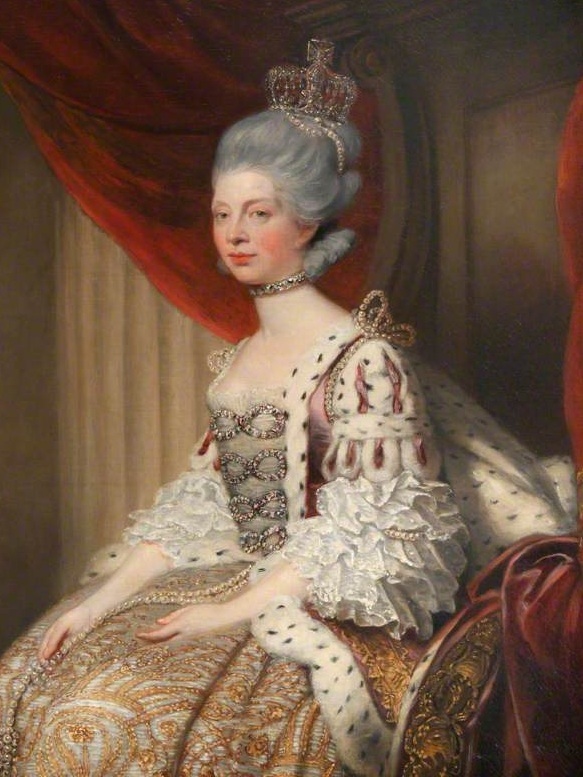
For Queen Charlotte of Mecklenburg-Strelitz, queenship was not defined by ceremony or spectacle.
It was defined by endurance.
When Charlotte married King George III in 1761, she was just 17 years old, newly arrived in Britain from a small German duchy she would never see again. Within hours of meeting the king, she was crowned queen of one of Europe’s most powerful nations.
The role demanded strength from the beginning.
Over the next two decades, Charlotte gave birth fifteen times. Royal motherhood was both a personal duty and a political one—each child strengthening the future of the Hanoverian dynasty. But pregnancy after pregnancy came with physical strain, constant scrutiny, and the quiet understanding that survival for mother and child was never guaranteed.
Not all of her children lived.
Prince Alfred died in 1782 at just two years old.
Prince Octavius followed a year later, only four years old when he died after a sudden illness.
Years later, Princess Amelia—one of Charlotte’s youngest and most beloved children—died in 1810 at the age of 27.
Each loss left its mark.
But Charlotte’s greatest burden came from the man she had married as a teenager.
King George III’s mental health steadily declined over the years, with episodes of confusion, paranoia, and instability that grew more severe with time. What modern historians believe may have been episodes of mental illness or a neurological disorder became a national crisis for the monarchy.
Behind palace doors, Charlotte lived with the reality of her husband’s condition long before the public fully understood it.
As the king’s health deteriorated, she was forced into an impossible position—both wife and caretaker, queen and guardian of a fragile crown. The emotional toll was immense. Eventually, George III’s condition worsened so dramatically that he could no longer rule, and the Prince of Wales assumed power as Regent.
Charlotte remained queen, but her life grew quieter and more isolated.
By the time she died in 1818 at the age of 74, she had spent nearly six decades inside the British monarchy—raising heirs, managing court life, supporting a troubled king, and carrying the weight of repeated grief.
Her story is rarely told in grand romantic terms.
There were no sweeping love stories or glittering legends.
Instead, Queen Charlotte’s life reflects a different reality of royal power in the 18th century.
Queenship was not glamour.
It was survival through childbirth, political pressure, personal loss, and the relentless responsibility of holding a dynasty together.
Not a crown of diamonds.
A crown of endurance.