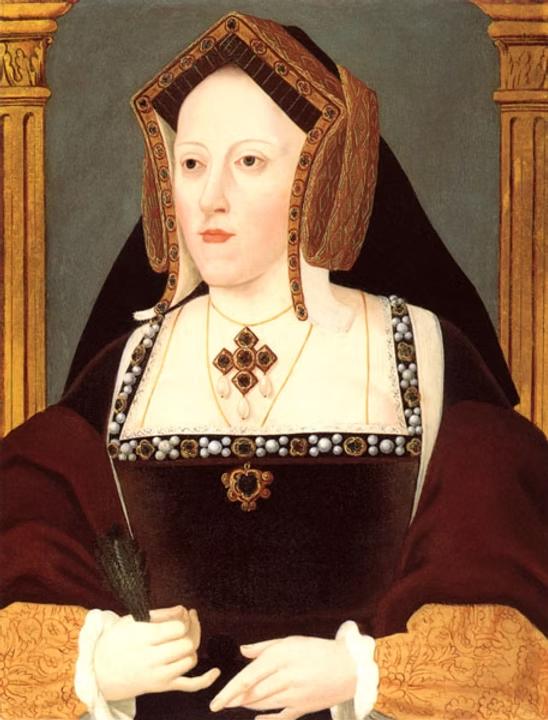
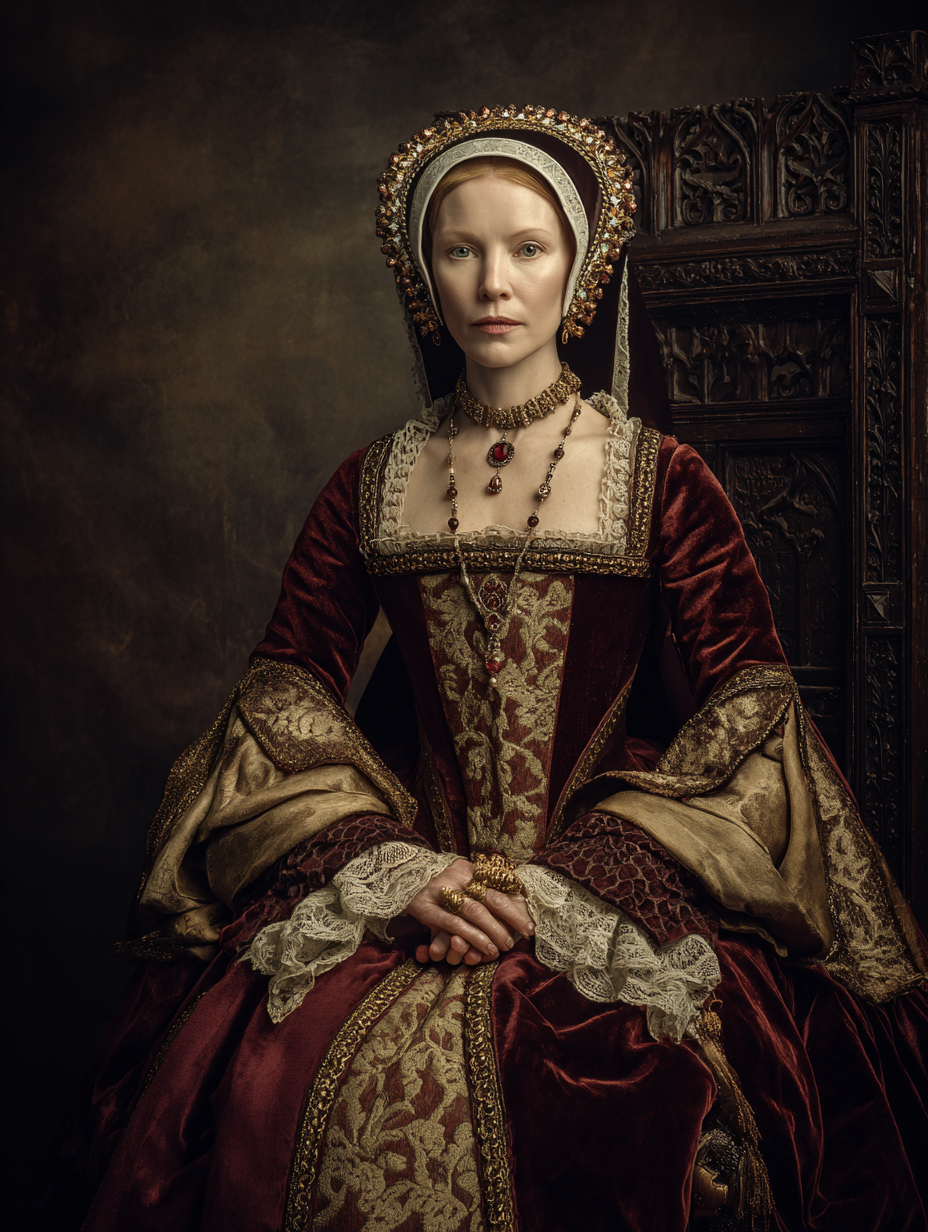
Katherine Parr survived the fearsome reign of Henry VIII, a king whose relentless pursuit of a male heir left wives disgraced, divorced, or dead. Intelligent, devout, and politically astute, Katherine navigated the Tudor court with caution and resolve. She acted as regent, promoted religious reform, and managed to do what no other wife could—outlive the king whose shadow loomed over them all.
But survival did not grant her peace.
Katherine died in 1548 and was laid to rest at Sudeley Castle, her grave meant to mark the quiet end of a remarkable life. Instead, centuries later, her body became the subject of morbid fascination. In the late 18th century, her tomb was broken open. Witnesses reported that her body was shockingly well preserved—so intact that curiosity quickly turned to desecration. Her coffin was repeatedly disturbed. Her remains were exposed. Teeth were removed. Pieces of her body were taken as grotesque souvenirs.
What should have been a sacred resting place was transformed into a spectacle.
This violation of Katherine Parr’s grave became one of the most disturbing posthumous scandals in royal history—a cruel irony for a queen who had spent her life carefully surviving the dangers of power, politics, and proximity to a tyrant. Even in death, she was denied dignity.
Katherine Parr was more than Henry VIII’s last wife. She was a survivor, a scholar, a reformer—and a woman whose body was treated as an object long after her voice was silenced. Her story is a chilling reminder that fame and power can follow women beyond the grave, and that history’s cruelty does not always end with death.