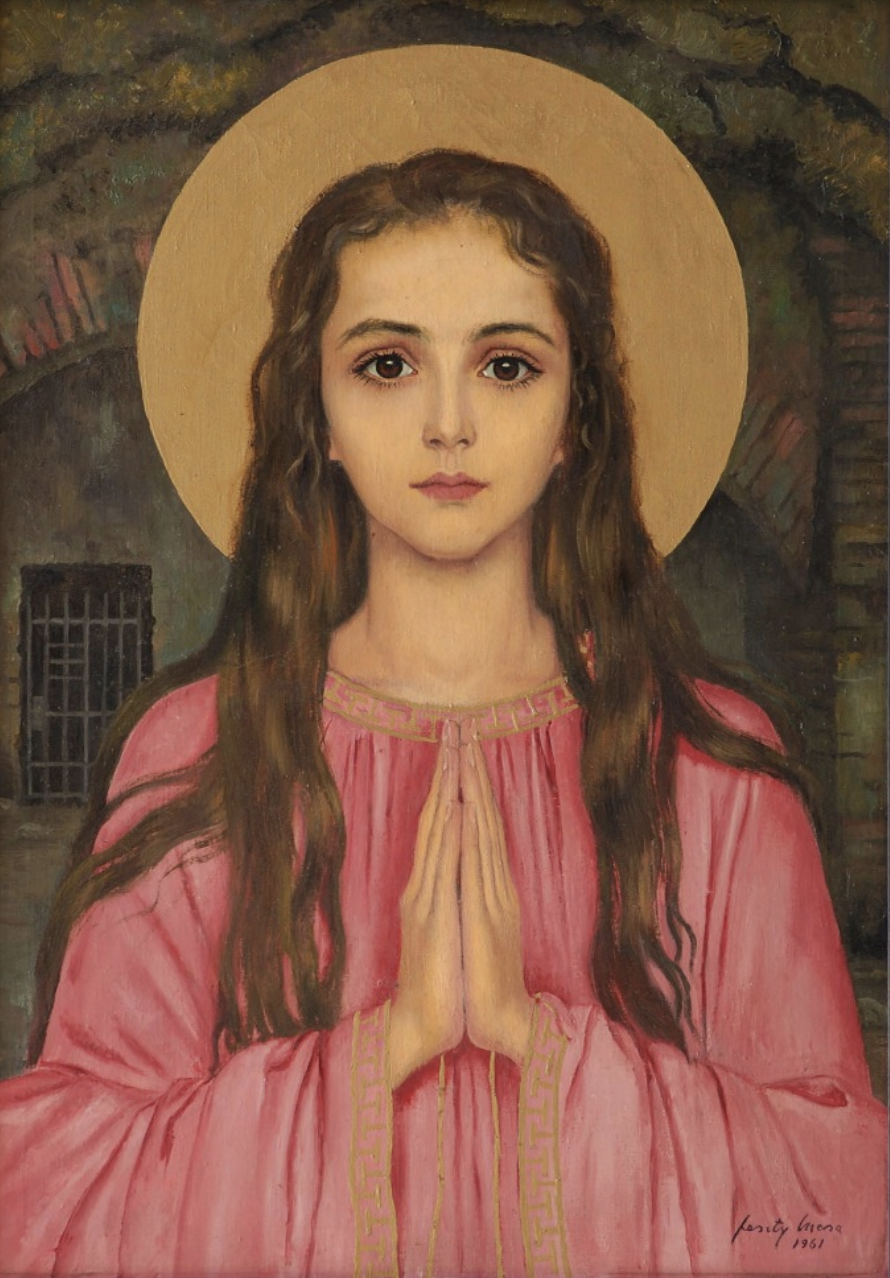
She was just thirteen years old when she defied an emperor.
A child by any measure—yet history remembers her as unbreakable.
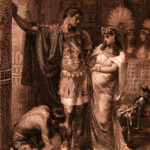
According to tradition, Saint Philomena was a young Christian princess living under Roman rule in the early fourth century. When Emperor Diocletian demanded her hand in marriage, she refused. Not out of rebellion or pride—but because she had vowed her life to her faith.
The refusal enraged him.
What followed was not a single execution attempt, but a sequence of brutal punishments meant to break her spirit. She was tortured. Bound. Thrown into the Tiber River with an anchor tied around her neck.
She did not drown.
She was dragged out and shot with arrows until her body was reportedly unrecognizable.
She lived.
Each survival only intensified the emperor’s fury. Finally, around 304 A.D., she was beheaded—her life ended, her body buried, her name erased from official memory.
For centuries, Philomena disappeared into silence.
No written biography survived. No grand basilica bore her name. She became one of countless anonymous martyrs swallowed by time.
Until 1802.
That year, archaeologists exploring the Roman catacombs uncovered a small tomb. Inside was a vial of dried blood—an unmistakable sign of martyrdom. Nearby was a simple inscription:
“Pax Tecum, Filumena.”
Peace be with you, Philomena.
The discovery stunned scholars and clergy alike. Soon after, reports of miracles began to circulate—healings attributed to her intercession, prayers answered, faith restored. What began as curiosity turned into devotion.
Within decades, Philomena became one of the most beloved saints in the Catholic world. Churches were dedicated to her. Pilgrims traveled for her relics. Even saints like John Vianney credited her with miracles.
A girl the empire tried to erase became impossible to forget.
Her story is not one of political power or royal legacy. It is the story of a child who chose conviction over survival—and whose quiet defiance echoed louder centuries later than any emperor’s decree.
History tried to bury her.
Faith brought her back.