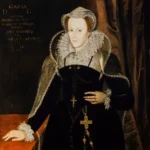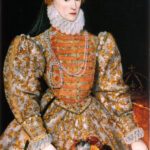

She was never meant to be a ruler — and she never wanted to be one.
Born in 1537, Lady Jane Grey was brilliant, deeply religious, and happiest surrounded by books. Fluent in languages and devoted to learning, she was far more interested in theology than court politics. But Jane’s intelligence and royal blood made her valuable in a dangerous way. In Tudor England, that was often a death sentence.
Jane’s childhood was shaped by pressure and control. Her parents and powerful relatives believed her bloodline could be used to secure influence at court. While other girls her age dreamed of marriage or freedom, Jane was groomed for something far darker: becoming a pawn in a battle for the English throne.
At just sixteen, she was forced into marriage with Guildford Dudley, a union arranged not for love, but for power. When Edward VI died in 1553, Jane was swept into a political plot designed to block Mary Tudor from inheriting the crown. Against her will, Jane was proclaimed queen.
Her reign lasted nine days.
Mary Tudor quickly gathered support, and the tide turned almost immediately. Jane — confused, frightened, and devastated — was deposed and sent to the Tower of London. There, stripped of titles and protection, she returned to the only comfort she had ever known: reading, prayer, and quiet reflection. She wrote letters filled not with anger, but with faith and forgiveness.
On February 12, 1554, Lady Jane Grey was led to the scaffold. Witnesses described her as calm and composed beyond her years. Blindfolded, she struggled briefly to find the execution block, whispering a prayer as she felt for it with her hands. Moments later, her life ended.
She was sixteen years old.
Lady Jane Grey did not die for ambition of her own. She died because powerful people decided her life was expendable. Remembered as the “Nine Days’ Queen,” she remains one of history’s most haunting figures — a gentle, brilliant girl destroyed by the ruthless pursuit of power.